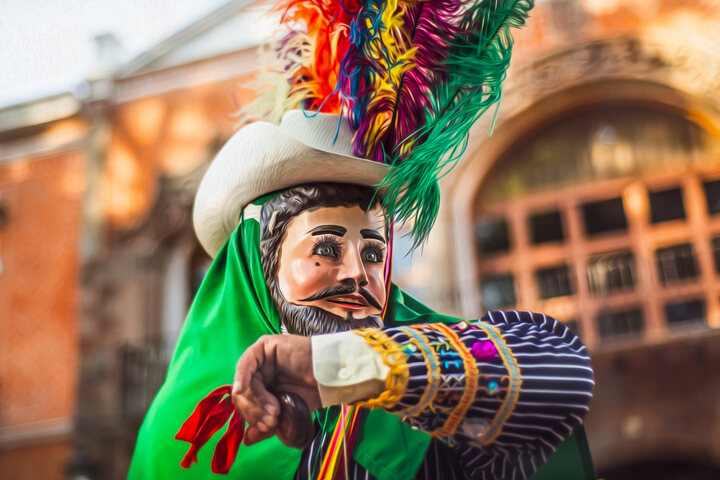
Carnaval in Mexico is a nationwide explosion of music, dance, and unique traditions.
From the rhythmic Brinco of Chinelos in Morelos to the gunsmoke-laced mayhem of Huejotzingo’s historic battle reenactments, here’s your front-row look at the can’t-miss Carnavals of 2026.
Tenosique Carnaval (Danza del Pochó), January 19 – Feb 17, Tabasco
Dubbed Mexico’s strangest Carnaval, Tenosique blends ritual, revelry, and total chaos. Costumed figures like Cojóes and jaguars take over the streets in a blur of dance, flour fights, and live music. Rooted in Maya tradition, it features the Danza del Pochó and closes with the symbolic death of Pochó on Shrove Tuesday. It’s earthy, wild, and unlike anything else in Mexico.
Carnaval de Campeche, February 5 – 17, Campeche
One of the oldest Carnavals in Mexico, Campeche’s celebration blends tradition and spectacle. Events include the Quema del Mal Humor, the colorful Paseo de las Flores, and the culminating with the chaotic and colorful Pintadera parade. People throw paint, colored powder, and confetti at each other. It’s a messy and joyful way to let loose before Lent.
Carnaval de Progreso “La Alegría de la Vida”, February 5 – 18, Progreso, Yucatán
The malecón fills with music, glitter, and seaside flair as Progreso throws one of Yucatán’s most playful Carnavals. Free concerts from Los Ángeles Azules, Ha*Ash, and La Original Banda El Limón anchor the week. Highlights include the Carnaval Perruno (dog parade), the flamboyant Dragnaval drag showcase, and the Batalla de Flores. Don’t miss the Paseo Dominical, a Sunday parade that drew over 400,000 people last year.
San Miguel de Allende Carnaval, February 6 – 14
This charming colonial town trades floats for flair in its playful Carnaval celebration. People paint their faces and put on handmade costumes. Masked diablos and pint-sized superheroes take to the streets armed with cascarones, confetti-filled eggs cracked playfully over heads to spread good luck. Centered around the Jardín Principal, it’s part masquerade, part mayhem, entirely small town magic.
Carnaval de Autlán, February 8 – 17, Jalisco
A mix of vibrant carnival and charro culture, featuring rodeos, bullfights, and tequila-fueled celebrations. The music lineup spans regional Mexican favorites and popular acts, including Edén Muñoz on February 8, Grupo Firme with Luis R Conriquez on February 13, and Julión Álvarez on February 16.
Carnaval de Veracruz, February 10 – 18, Veracruz
The “world’s most joyful Carnival” returns to its pre‑Lent spot, bringing Afro‑Caribbean rhythms, oceanfront vibes, and nonstop energy. The real show? The comparsas, dance troupes representing neighborhoods and social clubs, that fill the streets with feathers, sequins, and high-energy choreo.
Cozumel Carnaval, February 11 – 18, Quintana Roo
Cozumel’s Carnaval, one of the oldest in the Mexican Caribbean, fills the island with nightly parades, dance troupes, concerts, and costume contests. Main festivities run February 11–18, 2026, with big parade nights on Feb 14, 15, and 17 and a traditional Burning of Juan Carnaval to close. Expect family‑friendly energy and vivid island pageantry.
Circo Mérida Carnaval, February 11 – 18, Yucatán
Step right up! Mérida’s Carnaval transforms the city into a circus‑themed celebration full of magic. Parades feature stilt walkers, acrobats, and dancers in dazzling costumes. Free nightly concerts and family‑focused events keep the party going all week.
Carnaval La Paz, February 12 – 17, Baja California Sur
Carnaval La Paz puts women at the center of the celebration with this year’s theme, Reinas del Cambio (Queens of Change). Expect lively parades down the malecón, bold costumes in the Facha y Fantasía contest, and free nightly concerts that bring the waterfront to life. Families can join in on Carnavalito Infantil on February 22, a festive nod to the next generation of revelers.
Mazatlán International Carnaval “¡Arriba la Tambora!”, February 12 – 17, Sinaloa
This is one of the oldest and largest carnivals in the world, with over 128 years of history. The spectacular Combate Naval (Naval Combat) fireworks show erupts along the historic Olas Altas boardwalk. Cannon shells burst into fiery color, and explosions light up the water before thousands of cheering spectators.
Carnaval de Tlaxcala, February 12 – 18, Tlaxcala
Tlaxcala’s Carnaval is steeped in traditional dances and vibrant street culture, with hundreds of camadas de huehues – groups of dancers in elaborate costumes and wooden masks. The week includes parades, music, and local rhythms that go back generations, with a focus on community performance rather than spectacle alone.
Ensenada Carnaval, March 12 – 17, Baja California
A beloved carnival tradition in northwest Mexico since 1891, Ensenada’s celebration has evolved from intimate community gatherings into one of the region’s most anticipated annual events, drawing thousands of visitors from both sides of the border to the port city each year.
Isla Mujeres Carnaval “Soy Isla Mujeres”, February 13 – 17, Quintana Roo
Set sail for one of Mexico’s most charming Carnavals. This year’s theme, Piratas y Trigüeñas, celebrates the island’s legendary pirate past and the woman who stole a buccaneer’s heart. Expect costumes inspired by mermaids, whale sharks, Mayan myths, coral reefs, and palm trees. Look forward to a uniquely island-style celebration full of color, history, and Caribbean flair.
Dzilam de Bravo Carnaval, February 13 – 17, Yucatán
This lively fishing village is known for its giant illuminated floats, called animales. Towering up to six meters tall, these glowing creations are crafted by local artisans and brought to life with lights and movement. From sea creatures to fantastical beasts, these monstruos turn Dzilam’s night parade into something unforgettable.
Carnaval Zoque Coiteco, February 13 – 18, Ocozocoautla de Espinosa, Chiapas
In Coita, Chiapas, the Zoque people celebrate Carnaval with deep-rooted traditions and powerful symbolism. The celebration centers on cohuinás, houses of festivity, that send out characters like El David, Mahoma, Goliat, and Tigres to dance through the streets to tambor and reed flute. With ritual cleansings, mythic figures, and springtime symbolism, it’s a powerful expression of Zoque identity.
Carnaval Huejotzingo, February 14 – 17, Puebla
This one’s loud, smoky, and steeped in spectacle. Thousands dress in military-style costumes and reenact real 19th-century battles using live gunpowder rifles. It’s part street theatre, part historical tribute, with smoke and sound filling the air. If you like your Carnaval with boom and bravado, this is the one to see.
Carnaval Playa del Carmen, February 14 – 17 Quintana Roo
Downtown Playa comes alive with nightly concerts in Plaza 28 de Julio. This year’s lineup includes Bellakath, Santa Fe Klan, NSQK, and the 90’s Pop Tour. Just steps from the beach, families, teens, and tourists dance in a high-energy celebration of music and community.
Carnaval de Tlayacapan, Feb 14 – 17, Morelos
Known as the cradle of the Chinelo, Tlayacapan’s Carnaval traces its roots to the Huehuenches, masked dancers who mocked colonial elites in ragged clothes and wooden masks. Over time, those rebellious street performers evolved into Chinelos, now leaping through town in ornate robes to the sound of wind bands. It’s traditional, local, and proudly old-school.
Carnaval de Tepoztlán, Feb 14 – 17, Morelos
Tepoztlán hosts one of the region’s largest Chinelo celebrations. Since 1862, dancers in black velvet robes and feathered hats have leapt through the streets to the pulse of wind bands. With comparsas, kids’ dances, and nonstop music, it’s Carnaval at full volume in a Pueblo Mágico setting.
Carnaval Putleco, February 15 – 17, Putla Villa de Guerrero, Oaxaca
Blazing with color and cultural pride, this Oaxacan celebration fuses Mixtec, Triqui, and Afro-Mexican traditions into three unforgettable days. Dancers in hand-painted masks perform the Danza de los Viejos and Danza de los Diablos while confetti rains from balconies.