Summary
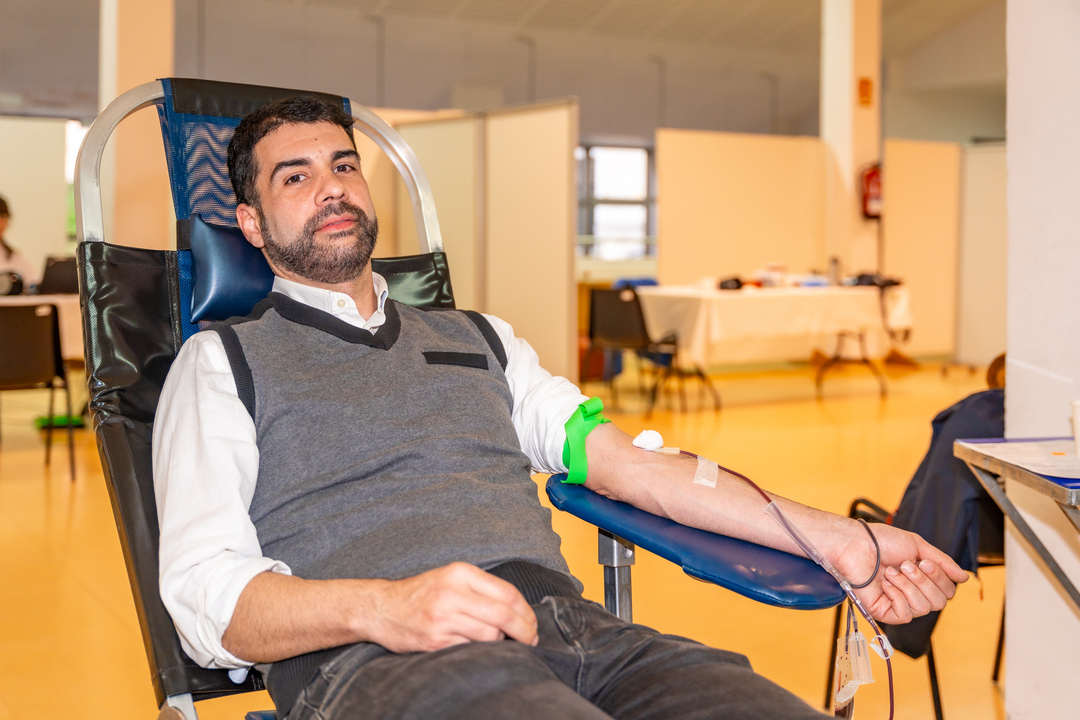
Blood donation in Mexico uses a replacement donor system, meaning hospitals typically require a patient’s friends or family to donate blood to replace the units used, rather than relying on large centralized blood banks. Understanding blood donation in Mexico is essential for everyone.
What Is the Replacement Donor System?
In Mexico, every hospital collects its blood supply and uses a replacement donor system.
Blood donation in Mexico ensures that hospitals always have the necessary resources available for patients in need of transfusions.
This means that, when someone needs a transfusion – for surgery, trauma, or illness – they or their family must find donors to “replace” the blood they use from the blood supply.
It is the responsibility of the patient’s friends and family network to replace the blood as soon as possible.
When considering blood donation in Mexico, it’s crucial to understand the responsibilities that come with it.
This can create serious problems in emergencies when there’s no time to organize donations.
That’s why understanding how blood donation in Mexico works – and planning ahead – is critical.
Participating in blood donation in Mexico can save lives and strengthen community ties.
In an emergency, and in the absence of a prearranged list of donors, hospitals may struggle to meet immediate transfusion needs.
Some hospitals have limited reserves and may require payment or proof of donors before proceeding.
As a foreigner in Mexico, knowing what to expect can make all the difference when the need arises.
What Changed in 2026: Mexico Strengthens Blood Donation Rules
In January 2026, Mexico enacted a major reform to its General Health Law that directly affects blood donation nationwide.[1]
These reforms enhance the framework around blood donation in Mexico, making it safer for both donors and recipients.
The reform reinforces that the donation of blood, blood products, plasma, and stem cells must be strictly altruistic and non-profit.
Any form of commercial trade or unlawful use of blood and blood derivatives is explicitly prohibited under federal law.
The changes also strengthen donor protection and oversight, requiring healthcare facilities to implement mandatory hemovigilance systems and integrate into a national biovigilance framework. This improves traceability, safety monitoring, and accountability throughout the blood donation and transfusion process.
While the reform does not eliminate Mexico’s replacement donor system, it clarifies the legal and ethical foundation of blood donation in the country: Blood is a shared public good, not a commodity.
For expats, this means greater transparency and safeguards when donating — and a stronger emphasis on repeat, voluntary donation to support the system overall.
Engaging with local charities can also promote blood donation in Mexico and raise awareness.
If Your Surgery or Treatment Requires Blood Transfusions
Once it’s been established you’ll be needing a transfusion, you need to determine HOW you’re going to get blood.
There are two ways to acquire blood for your treatment: directed donations and autologous donations.
What Does Directed Donation Mean?
This is the most common practice in Mexico.
When a patient needs blood for an upcoming procedure, hospitals request that family members or friends donate to replenish the blood bank’s supply.
Your doctor will give you the details as far as how much will be needed for your procedure.
The hospital where you will have your treatment/surgery should provide you with an account number so your friends and family can apply their donations to your procedure.
What Does Autologous Donation Mean?
Blood donation in Mexico can also involve autologous donations, where patients donate their own blood prior to surgery.
The other, less-commonly applied options are autologous donations.
This means you might be able to donate your own blood.
This option is typically considered for prescheduled elective surgeries where significant blood loss is anticipated.
While directed donations are free for anyone to participate in (as long as they are eligible), autologous donation requires a special collection order form signed by your physician – basically, the prescription.
Something to keep in mind with these options is that while directed donations are a free service, autologous donations will cost you some pesos.
Understanding the costs associated with blood donation in Mexico is vital for planning future procedures.
These costs range from 1750 MXN to 15,000 MXN per unit of blood, depending on the clinic and the amount of blood needed.
This cost covers the collection, processing and handling, and storage of your blood, as well as the standard transfusion service fee.
If you have international health insurance, confirm with the company that this type of blood donation will be covered by your policy.
What If You Don’t Have Family or a Community in Mexico Yet?
If you are new to the country, learning about blood donation in Mexico can help you navigate medical emergencies.
Blood donation in Mexico depends on community support and mutual help.
But this can bring unique challenges, especially in major emergencies.
Understanding how the replacement donor system works, and getting involved when you can not only prepares you for future medical needs, but it also strengthens the network that protects everyone.
Add this to the growing list of reasons to get your Medical Buddy system into place – stat.
[If you don’t know what the Medical Buddy system is – or how vital it is to living as a foreigner in Mexico – check out this article here.]
As a foreigner in Mexico, here are proactive steps you can take to get involved and strengthen the system:
- Connect with local expat communities and social groups
- Identify friends, neighbors, or community members who might be willing to help
- Learn about blood donation centers in your area
- Keep a list of contacts who meet donation requirements
- Respond when fellow expats or locals request donation help
- Participate in community blood drives
- Share information about donation requirements and locations
Am I Eligible to Donate Blood?
The eligibility criteria for blood donation in Mexico are designed to ensure the utmost safety for both donors and patients.
As with all blood donations, there are strict eligibility requirements.
The blood donation in Mexico requires extensive health screening, blood compatibility testing, and safety checks for diseases like HIV, hepatitis, and Chagas.
Eligibility Checklist:
Always check the institution’s specific eligibility requirements, as some places have more stringent restrictions. Here are the most common requirements.
- Age between 18 and 65
- Weight over 50 kg (110 lbs)
- In good health (no infections or open wounds)
- No alcohol or disqualifying medications in the past 48 – 72 hours
- No tattoos or piercings in the past 12 months
- Minimum 6 hours of sleep the night before
- Fasting for 2 – 4 hours before donation
- Valid ID (passport, residency card, or INE)
Permanent Disqualifiers:
- History of hepatitis B or C, HIV, or syphilis
- Previous intravenous drug use
- Diagnosis of Chagas disease
- Active cancer, severe heart disease, or tuberculosis
- Epilepsy or chronic fatigue syndrome
Temporary Waiting Periods:
- 72 hours after consuming alcohol, marijuana, or narcotics
- 12 months after tattoos, piercings, acupuncture, or sexual contact with strangers
- 24 – 72 hours after certain medications (check with medical staff)
- 6 months after surgery, major accidents, or pregnancy (can donate 6 months post-delivery)
- 28 days after travel to certain regions
- 28-day waiting period for tuberculosis, polio, measles, rubella, mumps, yellow fever, cholera, or influenza vaccines
Donation Frequency:
- Men: Up to 4 times per year (at least 3 months between donations)
- Women: Up to 3 times per year (at least 4 months between donations)
Again, there may be additional exclusions, limitations, and waiting periods, so it’s important to confirm with the clinic when you go to donate.
After donating 450 – 500ml of blood, you’ll rest, hydrate, and receive a donor card.
Where Can I Donate Blood in Mexico?
Both public and private hospitals in Mexico offer blood donation services.
All locations are equipped to handle the entire donation process from screening to collection and processing.
Be sure to contact the locations to find out if there are specific days and times to donate.
And here’s a perk when you donate: every donation undergoes comprehensive testing for infectious diseases, which are given to each donor.
It’s a free screening.
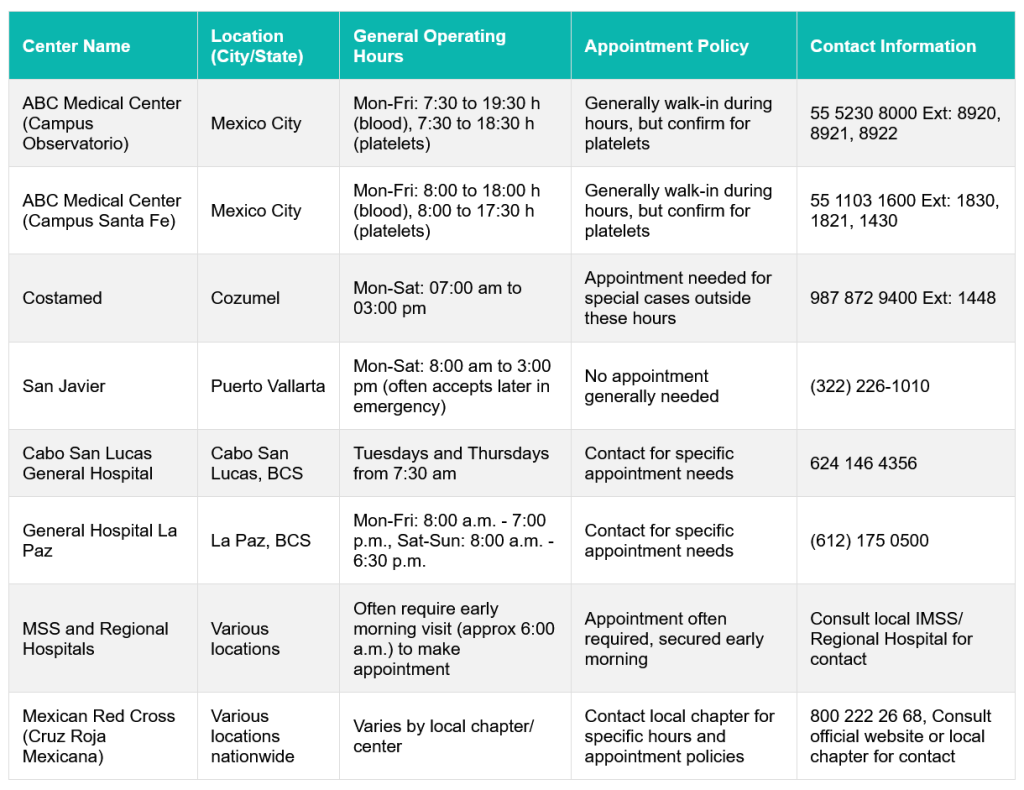
Key Blood Donation Centers in Mexico
Find your IMSS blood bank here.
Note: Operating hours and appointment policies are subject to change and can vary significantly by location and specific circumstances.
It is highly recommended to contact the chosen blood bank directly for the most current information before planning a donation.
Help Create Change in the System
In Mexico, most people don’t donate blood unless it’s for a friend or family member in need.
Replacement donor blood accounts for over 91% of all blood donations.
Voluntary donations make up less than 4% of the annual blood supply.
It’s these types of blood donations in Mexico that help strengthen the blood supply system for everyone.
By increasing voluntary blood donation in Mexico, we can help mitigate shortages and ensure everyone has access to needed transfusions.
The country faces a major shortage of voluntary donors, and it’s something the health system is working hard to change.
Consider giving blood before you or someone you care about needs it.
It’s safe, relatively simple, and potentially life-saving.
Becoming familiar with the procedures for blood donation in Mexico can empower you and your community.
Here are the steps to take if you want to be prepared and get involved:
-
- Be prepared: Identify donation centers, understand requirements, and know what to do if you need a transfusion.
- Donate now, before you need to: Contact local blood donation centers and contribute to Mexico’s voluntary blood supply.
- Build your network: Connect with expat communities who understand the importance of mutual support. Informing others about blood donation in Mexico can help create a ripple effect of support.
- Educate others: Share this information with fellow foreigners who might not understand the replacement donor system.
If you’re living in Mexico or planning to move here, understanding how healthcare works — including emergency requirements like blood donation — is only part of being prepared.
Knowing how blood donation in Mexico works can prepare you for any medical emergencies that may arise.
Speaking with a licensed health insurance broker who understands the Mexican system can help you make sure you’re covered before a medical situation arises.
Be proactive and understand the blood donation in Mexico procedures to avoid any last-minute surprises.

Sources:
[1] National Law Review. Comprehensive Reform of the General Health Law in Mexico.
Published 2023.
https://natlawreview.com/article/comprehensive-reform-general-health-law-mexico